


Aluminium Low Pressure Die Casting | Precision Structural Castings
When structural integrity cannot be compromised, the casting process matters as much as the alloy. Aluminium low pressure die casting (LPDC) fills the die cavity from the bottom up using controlled inert gas pressure of just 0.1 to 0.7 bar — eliminating the turbulence, oxide folding, and trapped porosity that conventional processes introduce. The result is a dense, heat-treatable microstructure that meets the fatigue, impact, and pressure-tightness requirements of road wheels, EV battery structures, aerospace housings, and industrial fluid systems. Where other processes produce parts that merely look right, LPDC produces parts that perform right — every cycle, every batch. Partner with Marcus Hi-Tech to engineer aluminium components built for the loads they will actually carry.
How to Initiate Your LPDC Project
From design feasibility to certified production supply, Marcus Hi-Tech manages the full LPDC development cycle with structured engineering checkpoints and complete process traceability.
Supplies Needed:
- 3D CAD Data (STEP / IGES format)
- Target Alloy & Heat Treatment Grade (A356-T6 / A357-T6 / ADC12)
- Mechanical Property Requirements (UTS, Yield, Elongation)
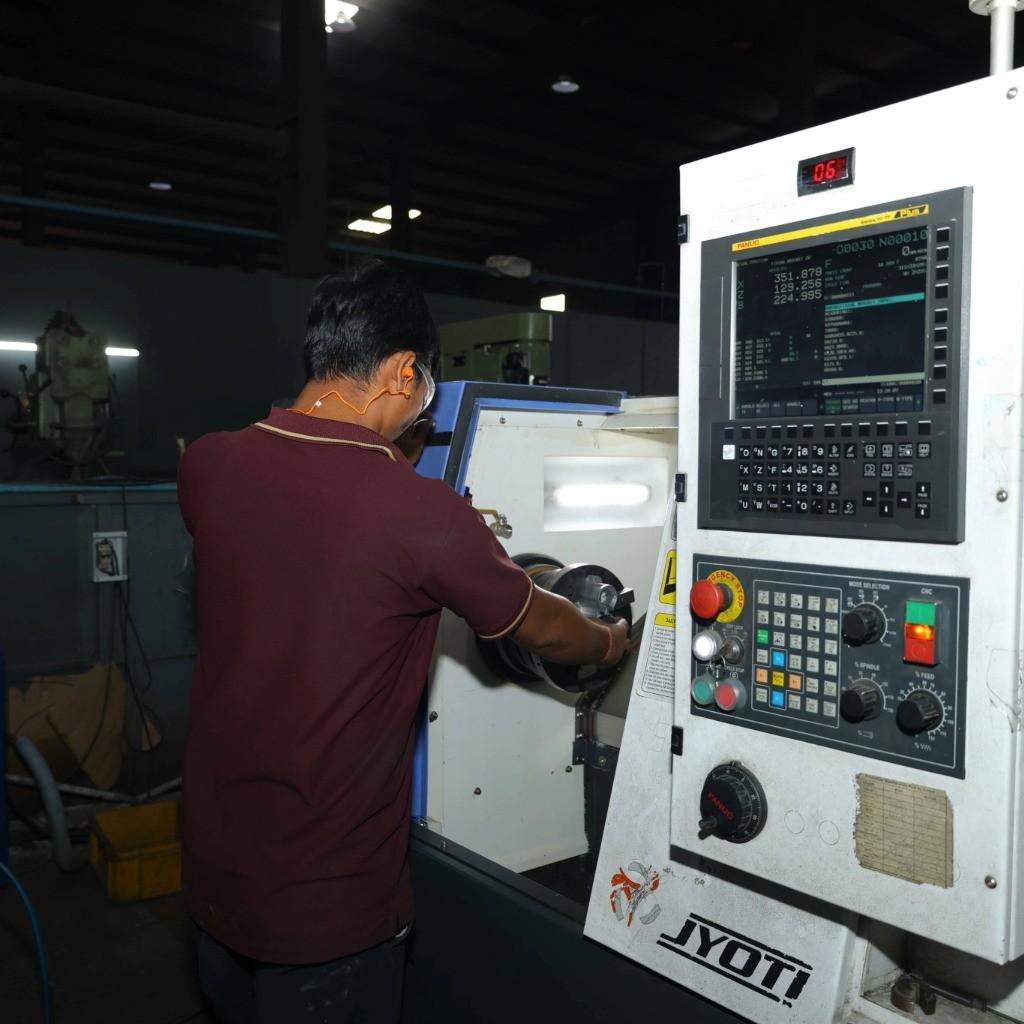
Step 1: Design for Low Pressure Feasibility
Submit your component geometry through our engineering portal. Our LPDC specialists evaluate wall thickness uniformity (3mm–12mm optimal), identify heavy sections prone to shrinkage, and recommend rib or coring strategies to ensure directional solidification from the bottom sprue upward. Mold filling and solidification are simulated using CAE software before tooling investment is committed.
Step 2: Alloy Selection & Heat Treatment Planning
Your application defines your alloy. Wheel and suspension components typically use A356-T6 for its proven fatigue life and OEM approvals. EV structural frames benefit from A357-T6 for higher yield strength and elongation under crash loading. Industrial bodies use ADC12 where pressure tightness and machinability are priorities. T5 or T6 ageing parameters are defined at this stage to hit your tensile and elongation targets from day one.
Step 3: Die Build, Pressurization Calibration & First Article
Hardened steel dies are manufactured with engineered thermal circuits to control solidification rate and prevent micro-shrinkage in heavy sections. The low-pressure furnace fill rate, dwell time, and intensification pressure are calibrated to your specific part geometry. First Article Inspection (FAI) includes CMM dimensional report, X-ray porosity assessment, and destructive tensile coupon testing — all documented before production sign-off.
Step 4: Certified Volume Production & Batch Traceability
Every production run is managed with automated pressure profiling, melt temperature logging, and heat number traceability. Batch documentation includes material certificates, mechanical test results, and NDT inspection records — meeting the supply chain requirements of automotive OEMs, aerospace primes, and EV platform manufacturers.
Product
1. OEM Aluminium Road Wheel
Model ID: MHT-WHL-LPDC-A356
Industry: Automotive
Description: Passenger car and light commercial vehicle road wheel — the flagship application of LPDC worldwide. The controlled bottom-fill eliminates the oxide inclusions and porosity that shorten fatigue life, delivering wheels that pass JWL, VIA, and TÜV rotary fatigue and impact standards. Machined spoke faces and hub bores are finished post-cast for precise hub-centricity and aesthetic appeal.
Technical Specifications:
- Material: Aluminium A356-T6
- Size Range: 15" – 22"
- Fatigue Standard: JWL / TÜV certified process
- Finish: CNC Machined Face + Powder Coat / PVD optional
- Availability: High Volume OEM Supply

2. EV Battery Module Structural Frame
Model ID: MHT-EV-BMF-A357
Industry: Electric Vehicles
Description: Large-format load-bearing frame that houses and protects lithium-ion battery modules in electric passenger vehicles. A357-T6 delivers the combination of high yield strength and elongation needed to absorb crash energy without fracture. Integrated cell retention ribs, coolant channel provisions, and harness routing bosses are all cast in a single shot — eliminating multi-piece welded assemblies.
Technical Specifications:
- Material: Aluminium A357-T6
- Yield Strength: ≥ 220 MPa
- Elongation: ≥ 8% (crash energy absorption)
- Part Envelope: Up to 900mm × 600mm
- Availability: Series Production (MOQ: 1,000)

3. Railway Bogie Bracket
Model ID: MHT-RAIL-BKT-A356
Industry: Rail & Heavy Transport
Description: Structural mounting bracket for railway bogie assemblies — a demanding application requiring consistent mechanical properties across large, heavy-section castings. LPDC’s slow, pressurised fill ensures uniform density through wall thicknesses up to 20mm, eliminating the internal voids that cause fatigue cracks under continuous cyclic rail loading. Full NDT and dimensional inspection documentation supplied per EN 15227 requirements.
Technical Specifications:
- Material: Aluminium A356-T6
- Wall Thickness Range: 6mm – 20mm
- NDT: Ultrasonic + X-Ray per EN 12681
- Weight: 8kg – 25kg per part
- Availability: Made to Order / Long-Run Contracts

4. Medical Imaging Equipment Housing
Model ID: MHT-MED-IMG-ADC12
Industry: Medical Devices
Description: Precision structural enclosure for MRI, CT scanner, and radiography equipment frames. LPDC aluminium delivers the dimensional stability and surface consistency required for complex multi-part assembly alignment. The low-porosity microstructure accepts anodizing and powder coating without blister defects, ensuring a clean, clinical finish. Non-magnetic properties make aluminium the material of choice for MRI-adjacent components.
Technical Specifications:
- Material: Aluminium ADC12 / A356
- Surface Quality: Class A (coating grade)
- Non-Magnetic: Fully MRI compatible
- Finish: Hard Anodize or Powder Coat
- Availability: Prototype through Production

5. Industrial Water Pump Volute Casing
Model ID: MHT-PMP-VLT-ADC12
Industry: Industrial & Fluid Handling
Description: Heavy-section volute casing for centrifugal water and process pumps used in agriculture, municipal water supply, and chemical processing. LPDC produces the thick, blow-hole-free walls required for sustained hydraulic pressure without seepage. Internal spiral flow geometry is cast near-net-shape, reducing CNC bore finishing time significantly. Vacuum impregnation sealing is applied as standard for pressure-critical applications.
Technical Specifications:
- Material: Aluminium ADC12 / A356
- Pressure Rating: Leak tested to 25 Bar
- Internal Flow Geometry: Near-Net-Shape Cast
- Finish: Shot Blast + Vacuum Impregnation Seal
- Availability: Custom Production Runs

Testimonial
"Our wheel programme demanded JWL certification from day one. Marcus Hi-Tech's LPDC process gave us the fatigue life data to pass on the first submission — no re-testing, no delays."
Suresh Parthasarathy
Programme Manager, OEM Wheel Supplier
"The A357 battery frames met our crash simulation targets exactly. The elongation values across 50 production castings were remarkably consistent — that kind of repeatability is rare." —
Ingrid Hoffmann
Structural Safety Engineer, EV Platform Division
"For rail applications, documentation is everything. Marcus Hi-Tech supplied full EN 12681 X-ray records and material certs with every delivery. Zero NCRs across two years of supply." —
Dmitri Volkov
Supply Quality Manager, Rolling Stock OEM
"MRI suite equipment cannot have magnetic contamination. Marcus understood this immediately — their aluminium LPDC housings are non-magnetic, dimensionally perfect, and arrive ready to assemble." —
Dr. Priya Sundaram
Biomedical Equipment Procurement, Healthcare Systems
"The pump casings seal at 25 bar without any rework. The vacuum impregnation process they apply as standard has eliminated every hydraulic leak issue we had with our previous casting supplier." —
Hans-Peter Müller
Operations Engineer, Industrial Pump Manufacturer