


- By ajith
- 22 Apr 2026
- No Comments
Sheet Metal Enclosures: The Ultimate Guide to Design and Manufacturing
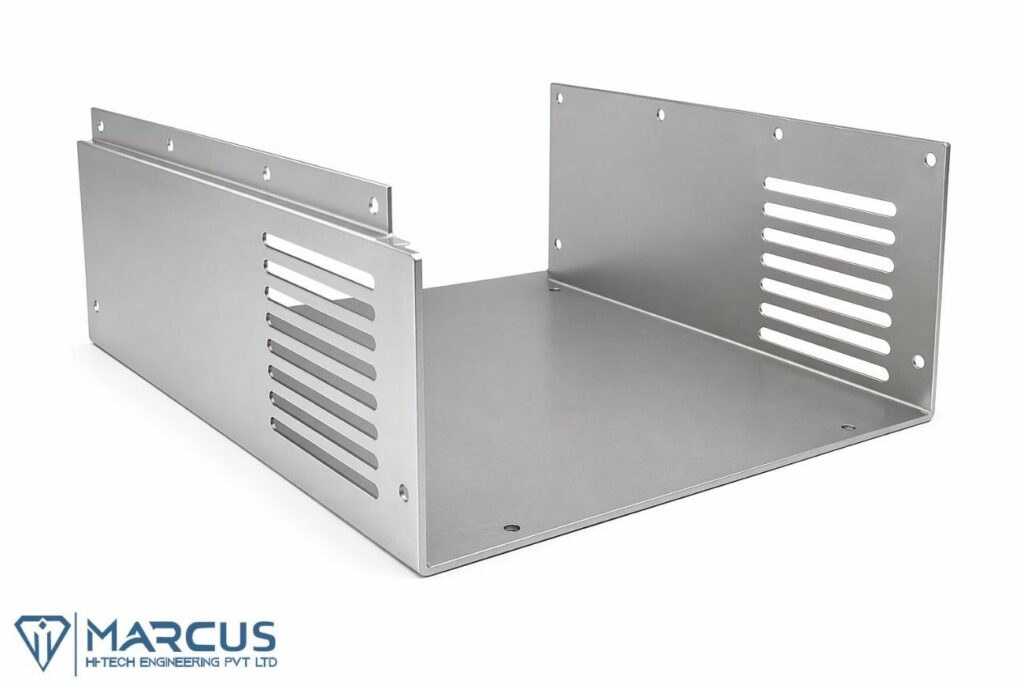
Sheet metal enclosures are a cornerstone of modern industrial and electronic product design. Known for their flexibility, precision, and cost-effectiveness, sheet metal enclosures are widely used in applications ranging from control panels to advanced electronic systems.
Whether you need a standard unit or a fully custom sheet metal enclosure, understanding how they are designed and manufactured helps you make smarter decisions for your project.
What Are Sheet Metal Enclosures?
Sheet metal enclosures are protective housings made by cutting, bending, and assembling thin metal sheets into a desired shape. Typically fabricated from aluminum, steel, or stainless steel, sheet metal enclosures house electrical and electronic components across a wide range of industries.
They are especially popular because they offer:
- High precision manufacturing
- Scalability from prototypes to mass production
- Excellent structural integrity and strength
Advantages of Sheet Metal Enclosures
Design Flexibility
Sheet metal can be cut and bent into complex shapes, making it the first choice for custom sheet metal enclosure designs where standard sizes won’t work.
Cost Efficiency
Compared to molded or cast enclosures, sheet metal enclosures are more affordable for low to medium production volumes — without sacrificing quality or precision.
Strength-to-Weight Ratio
Sheet metal enclosures provide strong protection while remaining relatively lightweight, particularly when fabricated from aluminum.
Rapid Prototyping
Designers can quickly produce and test a prototype sheet metal enclosure before committing to full-scale production, reducing time-to-market and costly design errors.
EMI/RFI Shielding
Like all metal enclosures, sheet metal enclosures naturally block electromagnetic and radio frequency interference — critical for electronics and communication equipment.
Sheet Metal Enclosure Fabrication Process
Understanding how sheet metal enclosures are made helps you design better, more manufacturable products.
Design & CAD Modeling
Engineers create detailed CAD drawings specifying dimensions, cutouts, bend lines, and tolerances. Good design at this stage reduces fabrication errors and costs.
Cutting
The sheet metal is cut to shape using:
- Laser cutting – high precision, clean edges, ideal for complex profiles
- CNC punching – fast and cost-effective for high volumes
- Waterjet cutting – suitable for thick materials or heat-sensitive metals
Bending and Forming
Press brakes bend the cut sheets into the required shape. Precise bend angles are critical to achieving correct dimensions in the finished sheet metal enclosure.
Finishing
Surface finishing protects and enhances the sheet metal enclosure:
- Powder coating – durable, available in any RAL color
- Anodizing – ideal for aluminum sheet metal enclosures
- Zinc plating or galvanizing – for corrosion resistance in harsh environments
Design Considerations for Sheet Metal Enclosures
Material Selection
- Aluminum – lightweight, corrosion-resistant, excellent for electronics and outdoor use
- Mild Steel – strong and cost-effective for indoor industrial applications
- Stainless Steel – best for food, medical, and marine environments
Sheet Thickness (Gauge)
Selecting the correct gauge ensures the sheet metal enclosure is durable without adding unnecessary weight. Typical gauges range from 16 to 22 gauge depending on the application.
Ventilation and Cooling
Heat-generating components require planned airflow. Sheet metal enclosures can be designed with louvered vents, fan cutouts, or filtered openings to manage internal temperatures.
Mounting and Accessibility
Design for easy installation, cable entry, and maintenance access. Include mounting holes, DIN rail provisions, and removable panels where needed.
IP and NEMA Rating Requirements
If the sheet metal enclosure will be used outdoors or in wet environments, the design must accommodate gaskets and sealed cable glands to achieve the required IP65, IP66, or NEMA 4/4X rating.
Applications of Sheet Metal Enclosures
Sheet metal enclosures are used across virtually every sector:
- Electrical control panels and switchgear
- Telecommunications and networking equipment
- Industrial automation and robotics
- Consumer and commercial electronics
- Renewable energy systems (solar inverters, battery storage)
- Medical devices and laboratory equipment
- Transportation and EV charging infrastructure
Custom Sheet Metal Enclosure Solutions
When off-the-shelf products don’t meet your requirements, custom sheet metal enclosures offer complete design freedom. Leading sheet metal enclosure manufacturers provide end-to-end services including:
- Concept development and DFM (Design for Manufacturability) review
- Prototype fabrication and fit testing
- Volume production with consistent quality
- Custom cutouts, inserts, and hardware
- Branding, labeling, and specialty finishes
Custom sheet metal enclosures are ideal for OEMs, system integrators, and any application with unique dimensional, environmental, or aesthetic requirements.
Common Challenges and How to Solve Them
Heat Management
Add louvered vents, filtered fan assemblies, or internal heat sinks. For high-heat applications, consider an aluminum sheet metal enclosure for its superior thermal conductivity.
Corrosion
Specify the correct finish — powder coating for steel, anodizing for aluminum, or stainless steel construction for highly corrosive or washdown environments.
Precision and Fit Issues
Work with experienced sheet metal enclosure manufacturers who use advanced CNC machinery and in-process quality checks to maintain tight tolerances across production runs.
Weight Constraints
Switch from steel to aluminum sheet metal enclosures to reduce weight without compromising structural integrity.
Choosing Sheet Metal Enclosure Manufacturers
The right manufacturing partner is critical to the success of your sheet metal enclosure project. When evaluating sheet metal enclosure manufacturers, consider:
- In-house capabilities – cutting, bending, welding, and finishing under one roof
- CAD/CAM integration – for accurate, repeatable production
- Certifications – ISO, UL, CE compliance
- Prototyping speed – fast turnaround on samples before production commitment
- Customization experience – proven track record with custom sheet metal enclosures across industries
Future Trends in Sheet Metal Enclosures
- Increased CNC and robotic automation in fabrication for faster, more consistent output
- Smart enclosures with integrated IoT sensors and connectivity features
- Sustainable materials and recyclable finishes aligned with green manufacturing standards
- Advanced anti-corrosion and thermal coatings for extended service life
Metal Enclosure vs. Plastic Enclosure
| Feature | Sheet Metal Enclosure | Plastic Enclosure |
|---|---|---|
| Strength | High | Moderate |
| EMI Shielding | Excellent | Poor |
| Weight | Moderate | Light |
| Fire Resistance | Superior | Lower |
| Cost(low volume) | Moderate | Lower |
| Customization | High | Moderate |
Conclusion
Sheet metal enclosures offer the ideal balance of strength, design flexibility, and cost-efficiency for both industrial and electronic applications. Whether you need a standard product or a fully custom sheet metal enclosure built to exact specifications, working with experienced sheet metal enclosure manufacturers ensures you get a solution that performs reliably in any environment.
From material selection and gauge choice to IP ratings and surface finish, every detail matters — and the right sheet metal enclosure delivers on all of them.