Hot Chamber vs. Cold Chamber Die Casting
Explore the distinctions between hot and cold chamber die casting processes. Learn about the advantages and industries they serve
Read article →
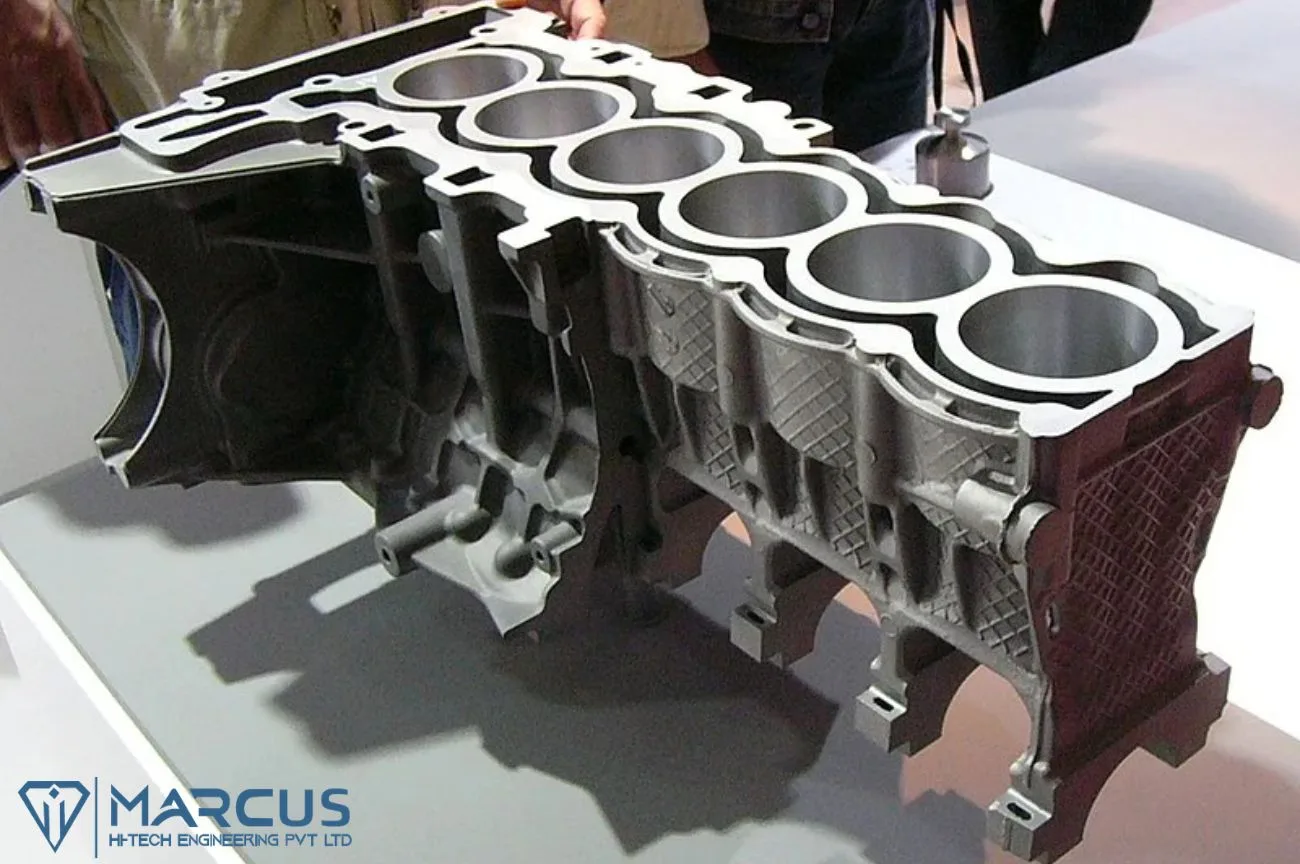
The manufacturing industry requires metal products with the highest accuracy and precision; making sure of that is the process popularly known as Die Casting. Die Casting helps manufacturers produce high-quality metal products with high dimensional accuracy and support with complex thin-walled metals.
Die Casting is a Metal Casting Process in which metals with high melting points are injected into the mold cavity under high pressure. The commonly used metals in this process are zinc, aluminum, copper, lead, tin, and magnesium.
Die casting involves a process in which molten metal is forced into a mold cavity under high pressure.
There are many types of die casting processes, however, the two most popular are—-Hot-Chamber Die Casting and Cold-Chamber Die Casting.
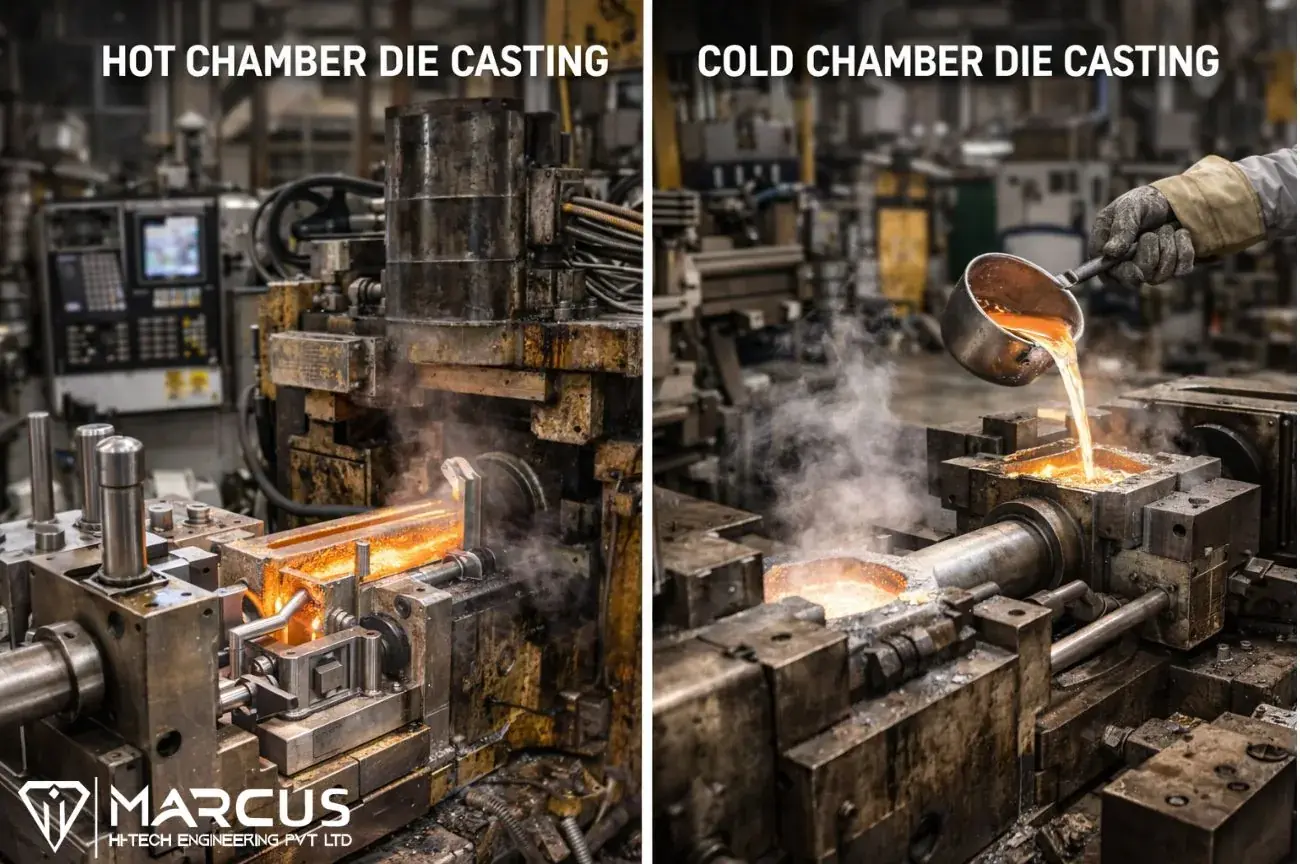
Hot Chamber Casting is only suitable for alloys having low melting points like lead, tin, zinc, and a few magnesium alloys.
In this, an alloy is melted in a furnace within the equipment. This process offers a longer tool life and requires minimum safety measures. The casting cycles are usually shorter, resulting in high productivity and the company’s manufacturing.
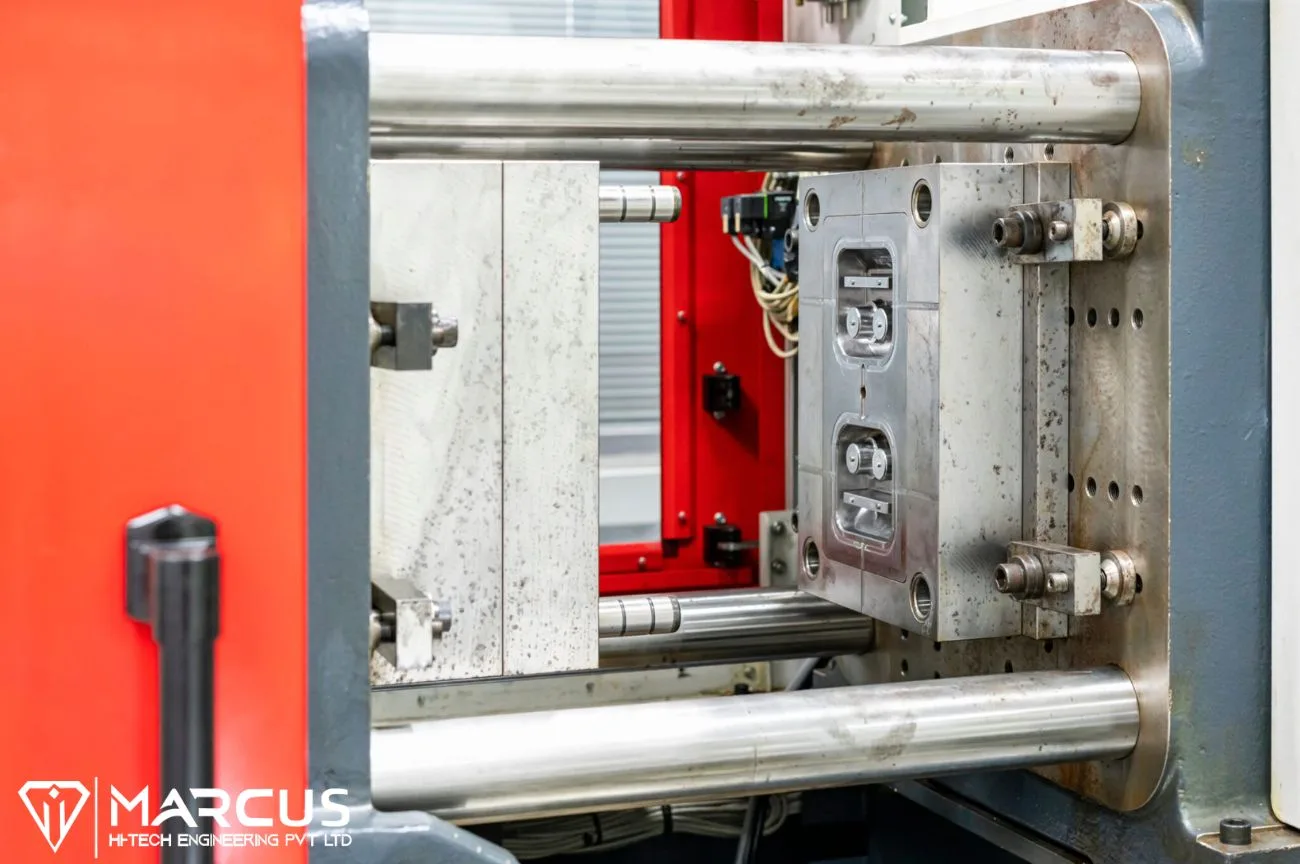
In a Hot Chamber Die Casting Machine, the fixed die half is called a cover die, which is mounted to a stationary platen (large plate to which each die half is mounted) and aligns with the gooseneck. The machine pushes the moving platen towards the cover die and holds it closed with great pressure until the molten metal is injected.
The plunger remains in the “down” position to hold the pressure while the casting “cools off.” After solidification, the plunger is retracted and the cast part is either ejected, manually removed from the machine, or pushed off the cover die. This ejection system, which includes an ejector die and ejector pins, allows the casting to be pushed out while releasing the die halves.
Cold Chamber Die Casting Machine is used to manufacture metals with high melting points such as aluminum, brass, and copper. In this process, the melting alloy is melted in a furnace placed outside the equipment. The cycles are usually longer in this process.
In contrast to Hot Chamber Die Casting, molten metal is ladled from the furnace into the shot chamber through a pouring hole. While the general function of the cold chamber machine is similar to the Hot Chamber, the Cold chamber works with a horizontal orientation and does not have a gooseneck.
A die cast mold is filled with molten metal under low pressure. The castings in such a process are highly pure due to the little to no slag responsible for the impurity. This method reduces the porosity in the castings which results in denser and more structurally sound products.
In gravity die casting a liquid metal is poured into a metallic mold without any external force. It is used for producing metal products from nonferrous alloys like aluminum, brass, and copper. It utilizes the force of gravity to facilitate the metal’s flow into the mold. It is commonly used in industries such as automotive, aerospace, and electronics, where high-quality, complex components are required.
It is a process for the production of complex and lightweight aluminum parts and components. It offers several advantages and is commonly employed in various industries, including automotive, aerospace, electronics, and consumer goods. Aluminum Die Casting is a versatile and efficient manufacturing process that combines the advantages of lightweight materials, complex geometry capabilities, high mechanical properties, and cost-effectiveness, making it a valuable choice for a wide range of industries and applications.
1. Automotive Industries
Die casting helps in the production of lightweight yet strong products which is particularly important in the automotive industry, where reducing vehicle weight is essential for improving fuel efficiency and meeting emission standards.
Die casting can create complex and intricate automotive parts with precision. The components are known for their strength and durability which makes them ideal for critical automotive applications.
2. Aerospace Industries
In aerospace, die casting is used to produce lightweight yet strong structural components for aircraft. Aluminum and Magnesium alloys are commonly used materials in aerospace die casting. These components include parts of the airframe, such as brackets, mounts, and structural members.
Die cast parts in the aerospace industry must meet rigid strength and weight requirements. The process allows for the creation of components that offer a high strength-to-weight ratio, contributing to the structural integrity and performance of the aircraft.
3. Electronic Industry
Die casting is used to create heat sinks and other thermal management components. These parts help dissipate heat generated by electronic components like microprocessors, transistors, and power devices which ensure the reliable and efficient operation of electronic devices. These components provide protection and structural integrity for sensitive electronics.
die casting plays a significant role in shaping the manufacturing industries as:
Die casting plays a vital role in the manufacturing industry by offering efficient, cost-effective, and versatile solutions for producing high-quality components. As manufacturing technology and materials evolve, die casting plays an increasingly vital role in meeting the demands of modern production.
Also Check: Advantages of Die Casting in Modern Industry
Die casting has greatly improved manufacturing, making it faster and more efficient across various industries. This method offers advantages to the aerospace, electrical, construction, and appliances sectors.
By teaming up with a suitable die casting supplier, manufacturers can obtain high-quality components that are precise and reliable for their projects. One dependable partner is Marcus Hi-Tech Engineering, renowned for their innovative die casting techniques and unparalleled outcomes.
1. What is die casting, and how does it work?
Die casting is a metal casting process that involves injecting molten metal into a mold cavity under high pressure. The metal solidifies to create a precise, complex, and high-quality part. It’s a versatile manufacturing method used for a wide range of applications.
2. What materials can be used in die casting?
Die casting can be used with various metals, including aluminum, zinc, magnesium, and brass. The choice of material depends on the specific requirements of the part being produced.
3. What are the advantages of die casting?
Die casting offers several advantages, including excellent dimensional accuracy, high production efficiency, and the ability to create intricate and thin-walled parts. It is also cost-effective for large-scale production.
4. What are the different types of die casting?
There are two primary types of die casting:
Hot Chamber Die Casting: Suitable for materials with low melting points like zinc. In this method, the injection mechanism is submerged in molten metal.
Cold Chamber Die Casting: Used for materials with high melting points like aluminum and magnesium. Here, the molten metal is ladled into the injection chamber.
More process, tooling, and sourcing notes from the Marcus engineering team.
Explore the distinctions between hot and cold chamber die casting processes. Learn about the advantages and industries they serve
Read article →Discover India's pressure die casting sector: demand, opportunities, trends, and investment advantages in a thriving industry.
Read article →Learn what is fettling in casting, process, and aluminium casting fettling tools used to improve surface finish, accuracy, and quality.
Read article →