Trusted Zinc Die Casting Suppliers in India | Since 1980
Looking for zinc die casting suppliers in India? IATF 16949 certified zinc alloy casting with in-house tooling, CNC machining & delivery.
Read article →
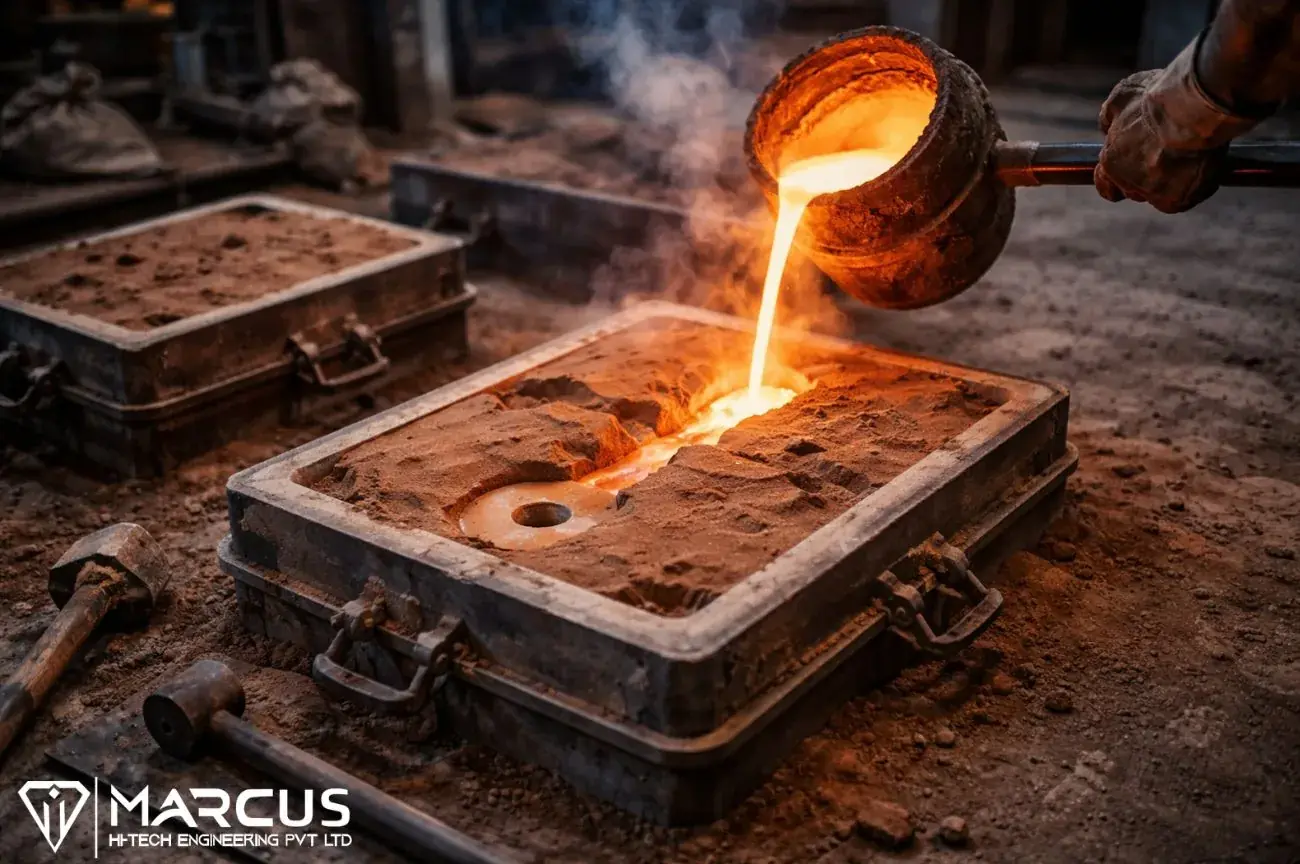
Metal casting is the backbone of modern industrial production. While both sand casting and die casting transform molten metal into complex shapes, they serve different strategic purposes. Choosing the right method depends on your production volume, precision requirements, and budget.
Sand casting is a versatile, non-permanent mold process. It involves compacting a specialized sand mixture around a pattern to create a cavity.
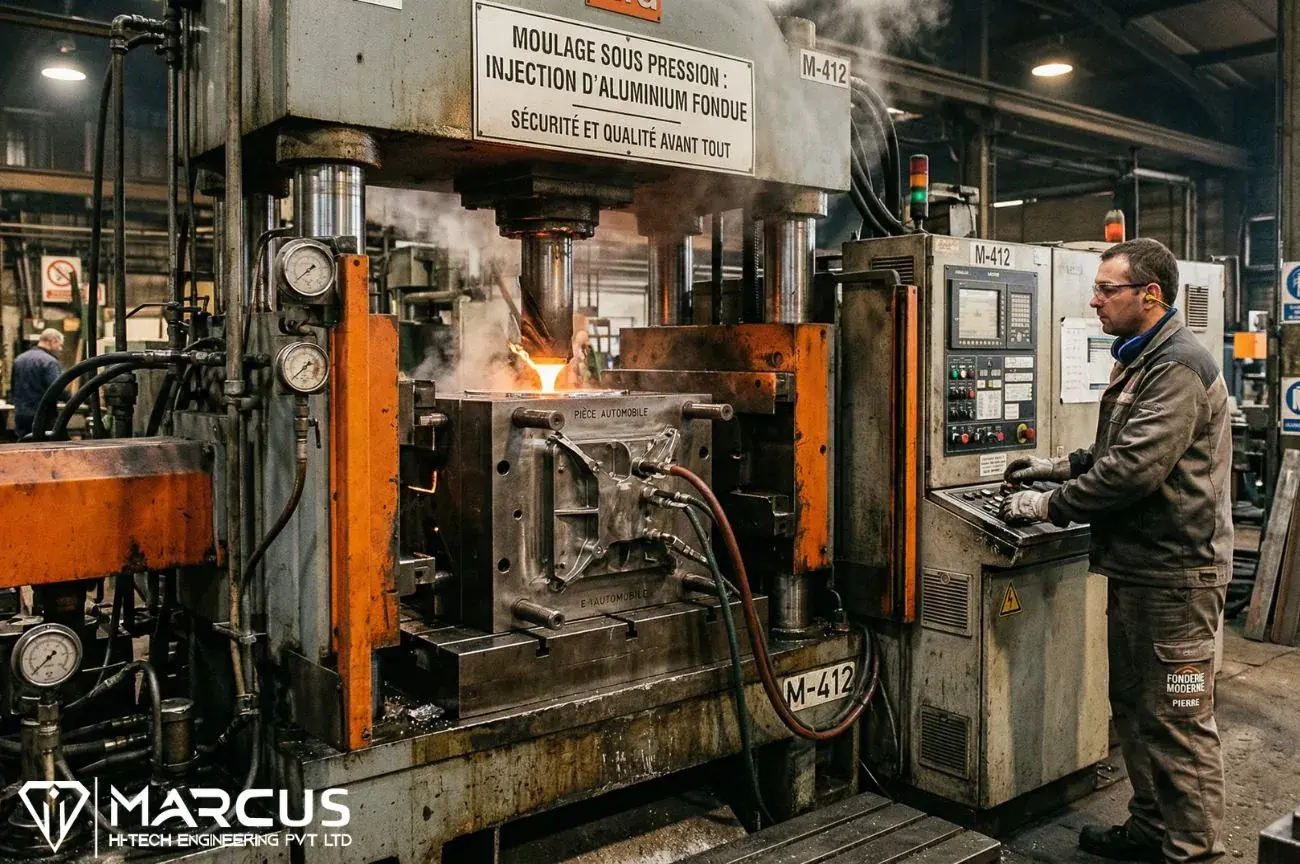
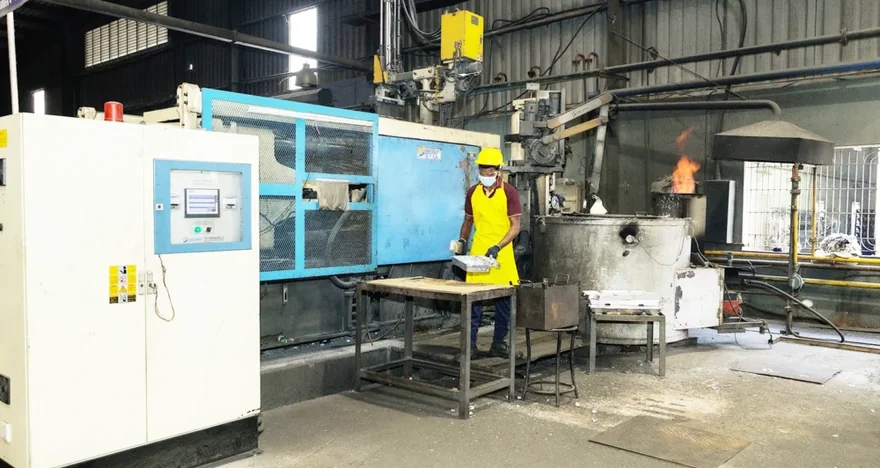
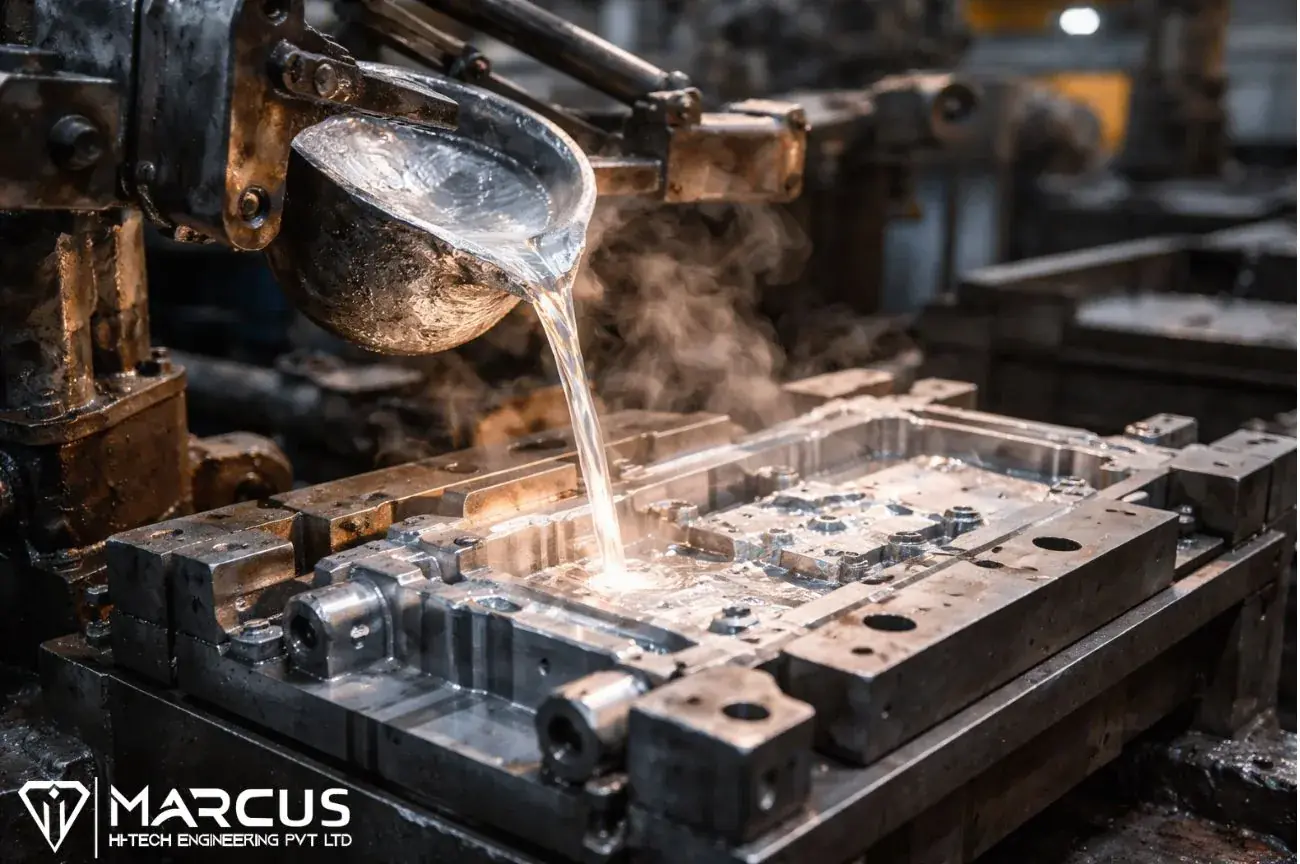
Die casting is a high-precision process using permanent steel molds (dies). For aluminum and copper alloys, the Cold Chamber Die Casting method is the industry standard.
| Feature | Sand Casting | Cold Chamber Die Casting |
|---|---|---|
| Mold Type | Non-permanent (Sand) | Permanent (Tool Steel) |
| Typical Volume | 1 – 1,000 units | 1,000 – 100,000+ units |
| Surface Finish | Rough (300-500 RMS) | Smooth (64-125 RMS) |
| Wall Thickness | Typically >3.0 mm | 1.5 mm to 12 mm |
| Dimensional Accuracy | Moderate | Very High |
| Tooling Cost | Low | High |
The quality of a sand casting is only as good as its sand and pattern.
Advanced Sand Solutions
Pattern Materials
If your part is cylindrical (pipes, bushings, or rings), Centrifugal Casting is the superior choice.
Identifying Defects
We maintain rigorous quality standards to mitigate common industry issues:
Marcus Hi-Tech Global Reach
With strategic facilities across India (Pune, Chennai, Bangalore, etc.), Vietnam, and China, we offer localized support with global delivery standards.
1. Is sand casting suitable for prototyping?
Yes. Due to low tooling costs and the speed of creating wood patterns, sand casting is the most cost-effective way to produce functional metal prototypes.
2. Can I achieve thin walls with sand casting?
Generally, no. Sand casting requires thicker walls (usually >3mm) to ensure metal flow. For walls as thin as 1.5mm, Cold Chamber Die Casting is required.
3. Why is the die casting “Cold Chamber” specifically mentioned for aluminum?
Aluminum’s high melting point and corrosive nature would destroy the submerged “gooseneck” pump used in hot chamber machines. The cold chamber method is the only way to ensure machine longevity and part purity.
4. How can I reduce the cost of my die-cast parts?
The best way to reduce cost is through Design for Manufacturing (DfM). Reducing part weight and optimizing rib structures can lower both material costs and cycle times.
More process, tooling, and sourcing notes from the Marcus engineering team.
Looking for zinc die casting suppliers in India? IATF 16949 certified zinc alloy casting with in-house tooling, CNC machining & delivery.
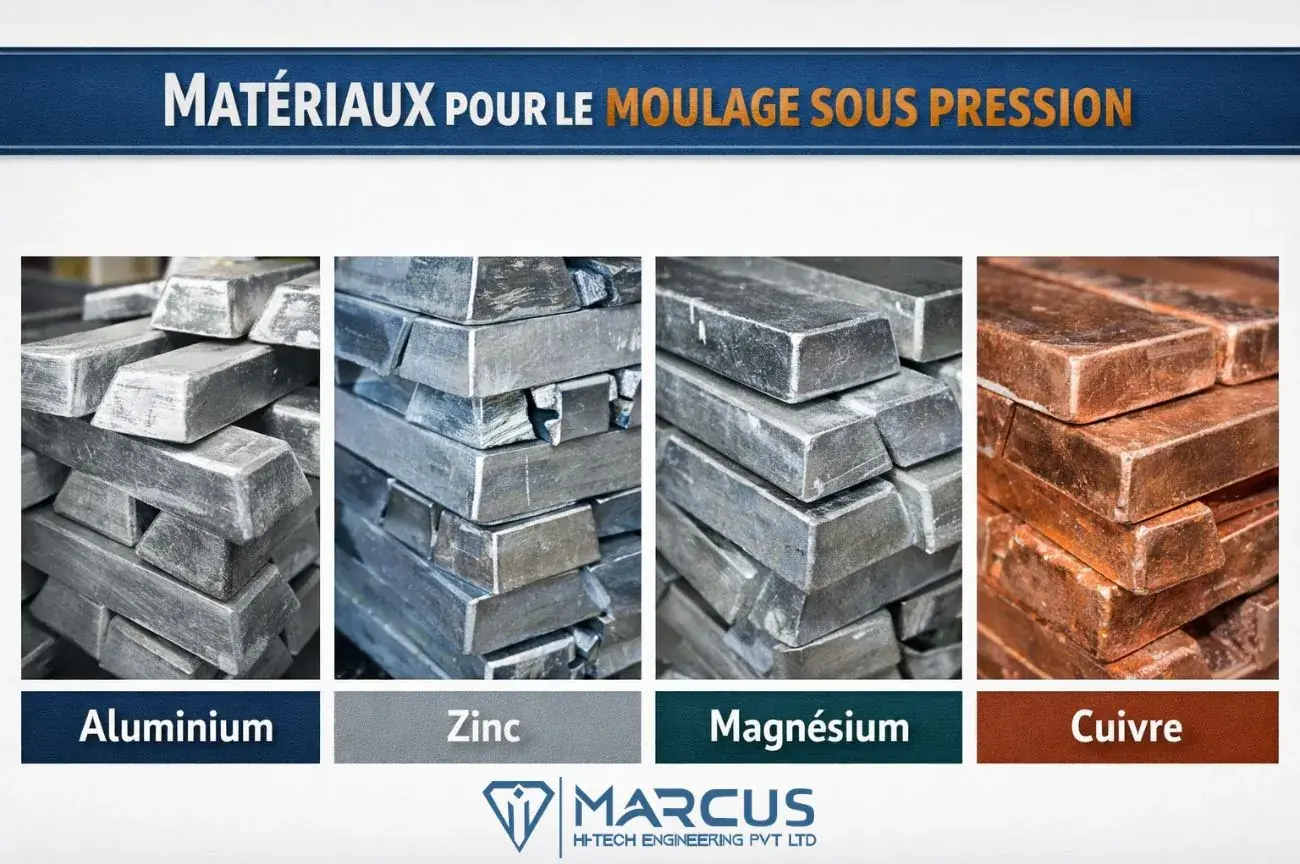
Read article →Découvrez les matériaux utilisés dans le moulage sous pression, notamment l'aluminium, le zinc, le magnésium et leurs avantages.
Read article →Découvrez le moulage sous pression : procédés, matériaux, fonctionnement et applications industrielles clés modernes.
Read article →