Die Casting Shaping the Future of Manufacturing
Exploring Die Casting, its types, process, and advantages. Introducing Marcus as the leading die casting supplier across industries.
Read article →
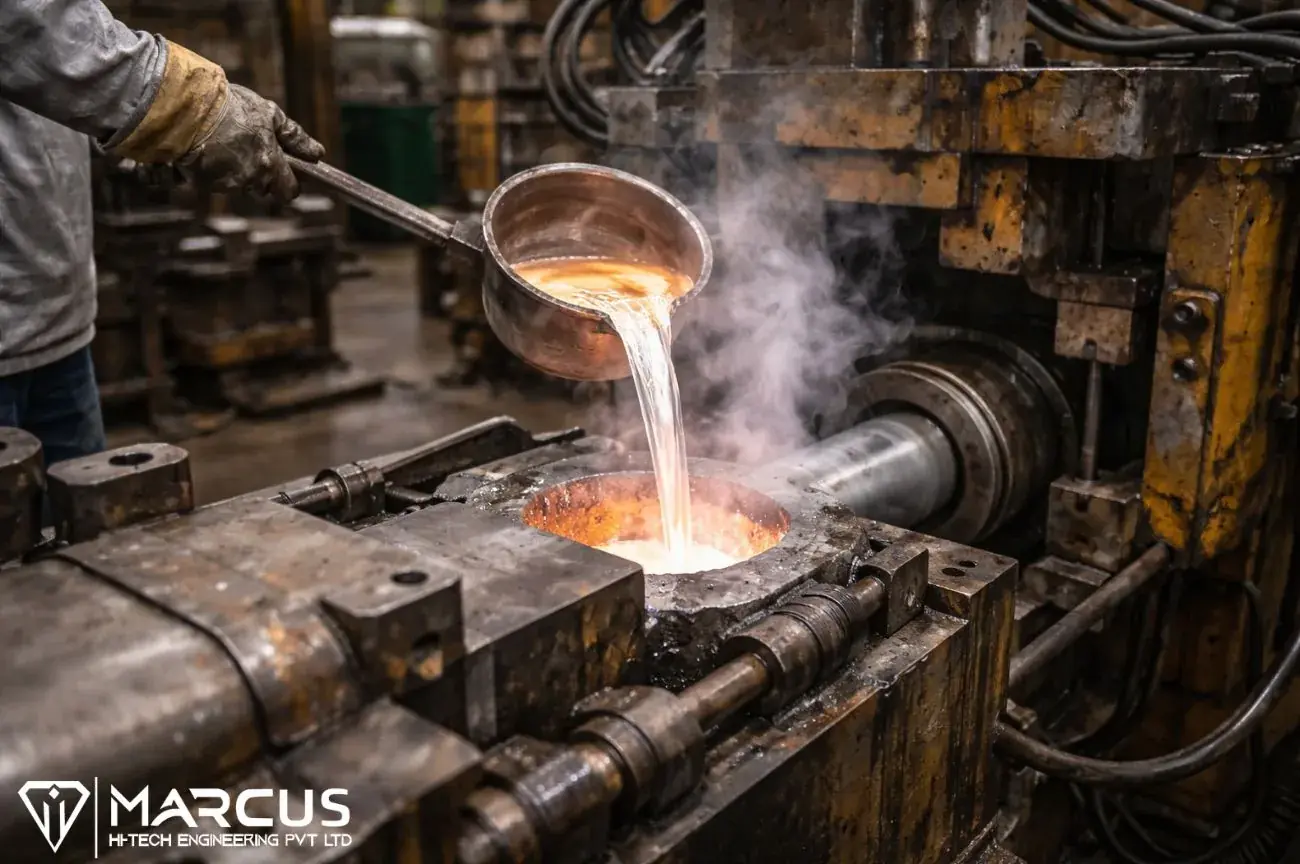
Cold chamber die-casting is particularly useful and versatile among the many die-casting techniques. Die casting is a fundamental process in the manufacturing of metals. The die-casting market is predicted to increase from USD 77.99 billion in 2023 to USD 105.55 billion by 2028, per reports. We will closely examine cold chamber die casting in this extensive guide.
This study will examine its complex workings, reveal its numerous benefits, trace its historical development, examine the key elements that have shaped its success, and examine its broad range of industry applications. When this adventure ends, you will thoroughly understand the cold chamber die-casting field, providing you with valuable and educational knowledge.
We must take a historical tour that charts the development of cold chamber die casting to thoroughly understand its significance.
Die casting originated in the 1800s when the United States patented its first die-casting machine. Still, the first die-casting machine with a cold chamber appeared in the early 1900s, and that too in Germany.
The hydraulic pumps used in these early machines allowed high-pressure injection of molten metal into the die cavity. Cold chamber die-casting machines developed into sophisticated machinery capable of producing intricate shapes and precise parts with remarkable consistency as technology and materials improved.
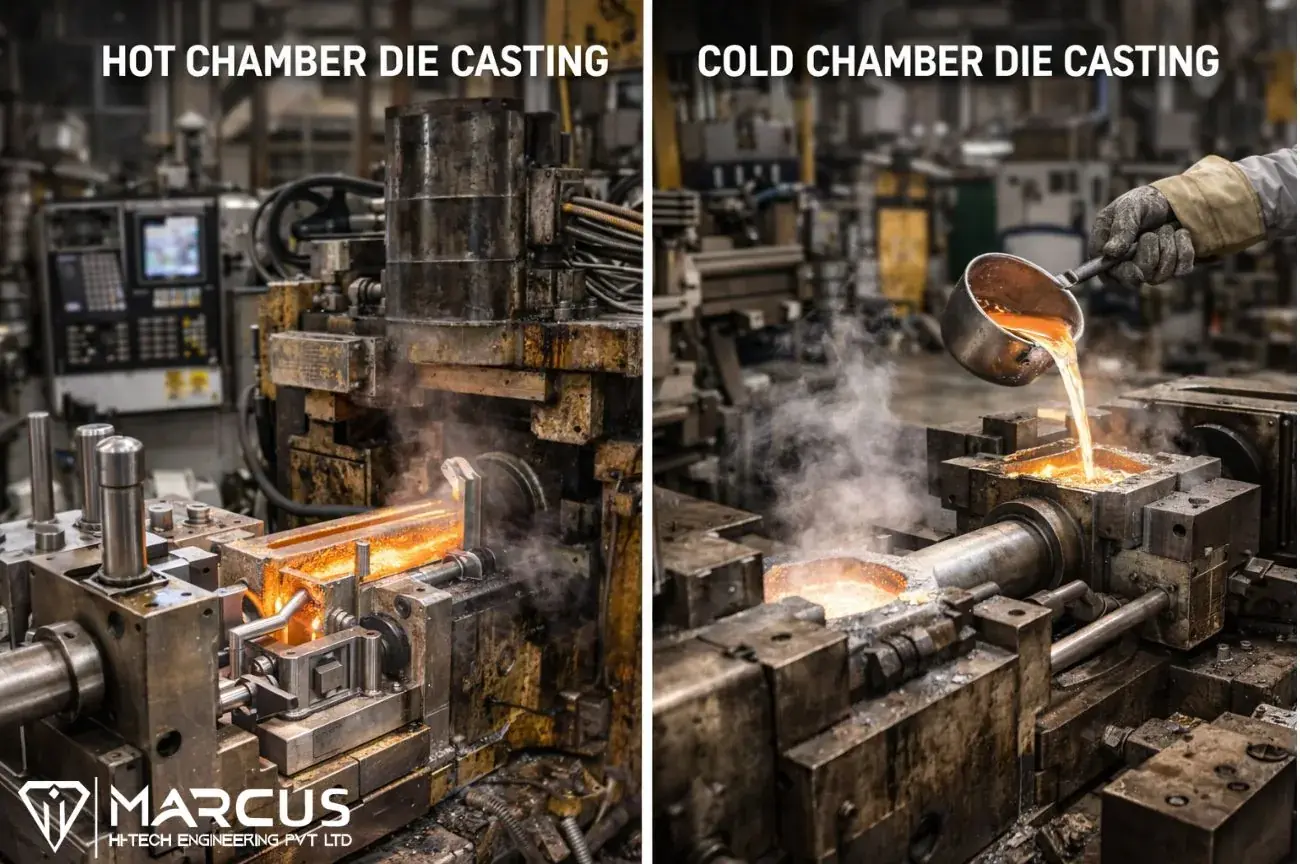
Cold chamber die casting is a manufacturing process that involves injecting molten metal into a reusable mold cavity at high-pressure. This method is known for its ability to create complex and intricate shapes with high precision, making it indispensable in various industries. To comprehend this process fully, let’s break it down step by step:
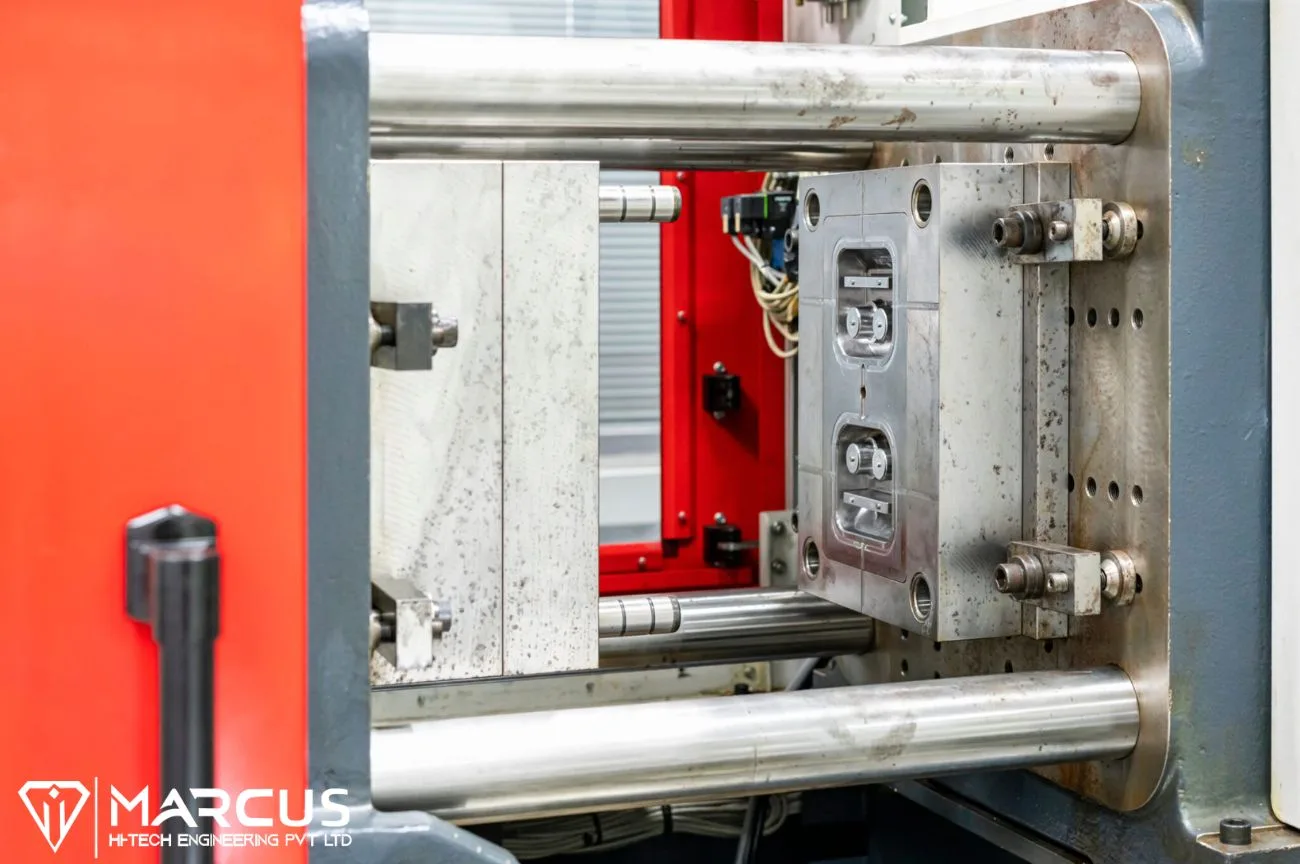
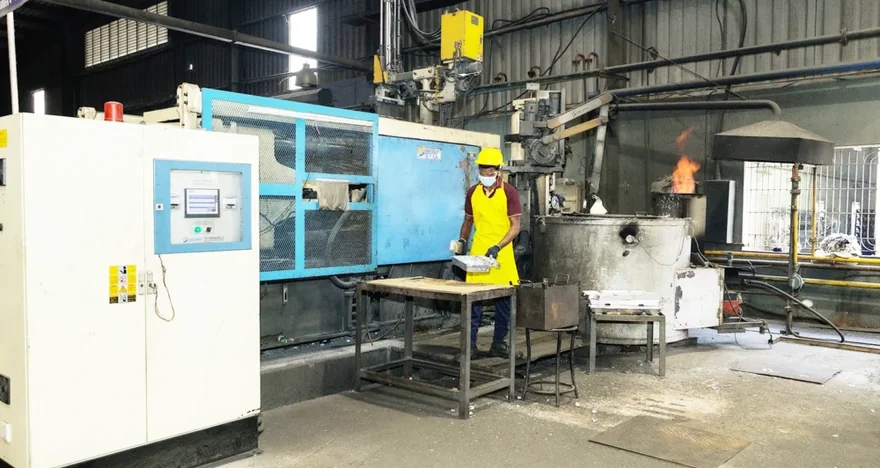
The success of cold chamber die casting is underpinned by a set of specialized equipment and tools:
One of its most striking characteristics is the remarkable adaptability of cold chamber die casting to different materials. Numerous metals are amenable to this method, and they are as follows:
Several industries, including the automotive and aerospace ones, rely heavily on aluminum alloys due to their durability, versatility, and low weight.
Alloys of brass are frequently used in situations where strength and visual appeal are paramount.
Copper alloys are highly sought after because of their high electrical conductivity, making them perfect for electronic devices.
Appreciating the significance of cold chamber die casting in the manufacturing landscape requires understanding its benefits. Let’s examine its primary benefits:
A notable advantage of cold chamber die casting is its ability to create components with unmatched accuracy and intricacy. The high-pressure injection process is an essential option for industries where tolerances and complex geometries are critical, guaranteeing the accurate reproduction of even the most minute details.
Proving incredibly durable and precise parts is synonymous with cold chamber die casting. An increasingly homogeneous material structure results from this process’s higher injection pressures. Due to this uniformity, the end product is stronger and more durable, which makes it ideal for uses where dependability is essential.
One characteristic that sets cold chamber die casting apart is its versatility. An extensive range of materials, including copper alloys, brass, and aluminum, can be processed using this method. This adaptability enables manufacturers to select materials that best meet the needs of their components, regardless of whether they place a higher value on electrical conductivity, corrosion resistance, or lightweight characteristics.
Cold chamber die casting is based on efficiency. Increased productivity and reduced expenses can result from automating the process. Cold chamber die casting is an affordable option for producing complex and high-stress components because of its efficiency and capacity to generate high-quality finished products with little waste.
A lot of variables affect the quality of the finished product, which are crucial to the success of cold chamber die casting. Among these elements is:
Material selection is crucial to getting the desired qualities in the finished product. The proper material selection guarantees compatibility with the cold chamber die-casting process and that the component satisfies the necessary specifications.
Equally important is the design of the die, also known as the mold. Proper gating, geometries, and cooling channels must be carefully designed to avoid flaws and ensure the mold cavity is filled properly.
To optimize the casting process, the machine’s injection pressure, speed, and holding time must be precisely adjusted. To ensure consistent results and producing high-quality components, it is imperative to strike the correct balance between these settings.
A final product’s mechanical properties and dimensional accuracy are directly influenced by its cooling time. Since it varies based on the material and component being cast, figuring out the ideal cooling time frequently requires trial and error.
Lubrication Friction between the molten metal and the mold is decreased by proper lubrication. Adequate lubrication prolongs the life of the mold, which adds to overall process efficiency and minimizes defects in the final product, improving its quality.
With its exceptional precision and durability, cold chamber die casting proves its mettle in numerous sectors. Let’s explore some notable applications:
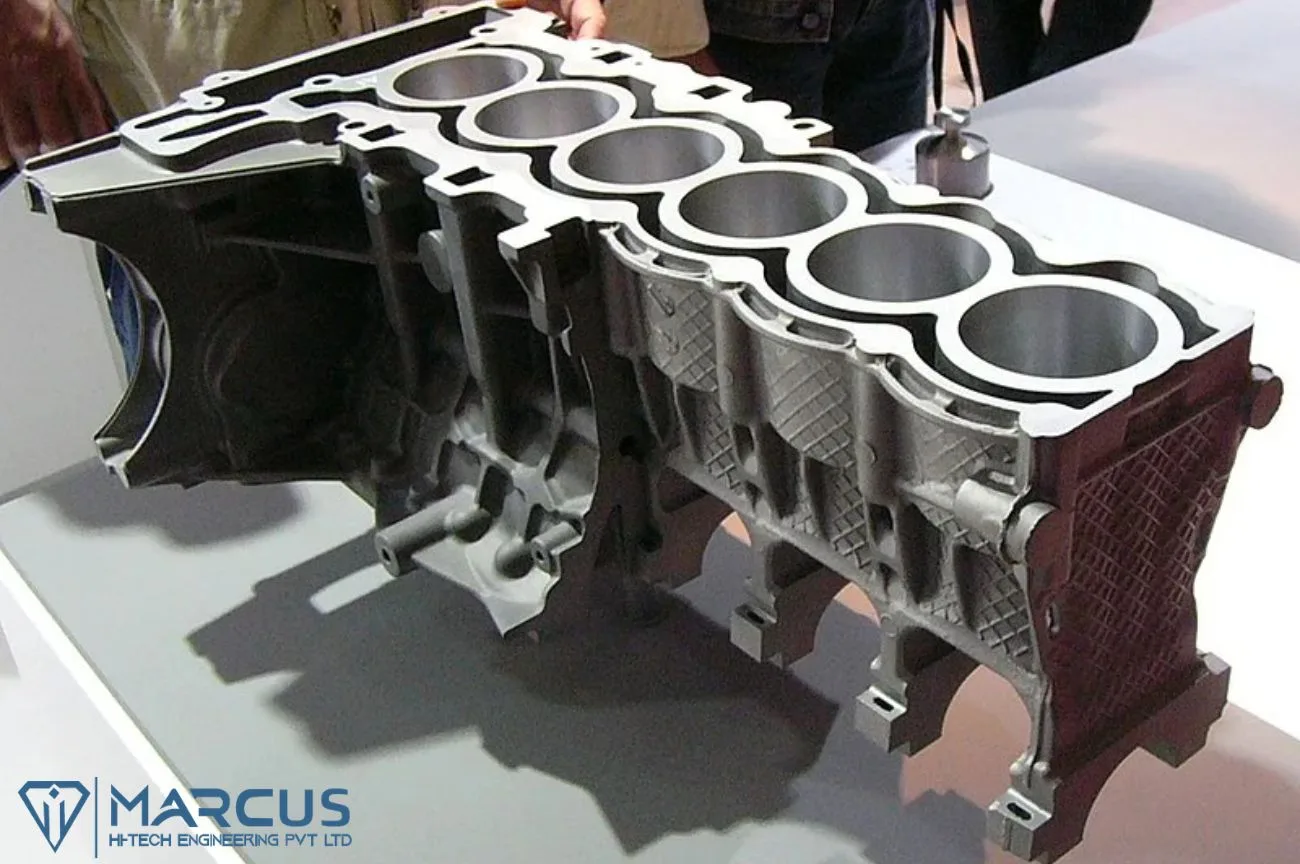
The automotive industry, known for its stringent demands on component quality, relies heavily on cold chamber die casting. Engine blocks, transmission cases, and various structural components are prime examples of parts that benefit from the strength and durability offered by this process.
In the aerospace industry, where the stakes are exceptionally high, cold chamber die casting produces complex components that require an exquisite blend of strength, low weight, and precision. Components like turbine blades, compressor casings, and various structural parts rely on the process’s ability to deliver uncompromising quality.
Cold chamber die casting finds a niche in this sector, contributing to the production of surgical instruments, medical devices, and implants. The process’s ability to create small, intricate components with complex shapes and tight tolerances aligns perfectly with the industry’s exacting standards.
Components like cell phone frames, laptop cases, and camera bodies demand robustness, durability, and aesthetic appeal. Cold chamber die casting delivers on all fronts, producing components that not only withstand the rigors of everyday use but also meet the visual expectations of consumers.
Also Check: Types of Die Casting Processes
Looking ahead, cold chamber die-casting has a lot of potential. Its capacity to satisfy the rigorous requirements of sectors requiring high-stress components guarantees its continued applicability in a manufacturing environment that is always changing. At the forefront of precision metal manufacturing, cold chamber die casting will continue to innovate and maintain a strong commitment to sustainability.
With its extensive guide, you can easily navigate this amazing manufacturing process’s complexities and partner with a trusted die casting supplier like Marcus to get the best manufacturing assistance.
More process, tooling, and sourcing notes from the Marcus engineering team.
Exploring Die Casting, its types, process, and advantages. Introducing Marcus as the leading die casting supplier across industries.
Read article →Explore the distinctions between hot and cold chamber die casting processes. Learn about the advantages and industries they serve
Read article →Discover India's pressure die casting sector: demand, opportunities, trends, and investment advantages in a thriving industry.
Read article →