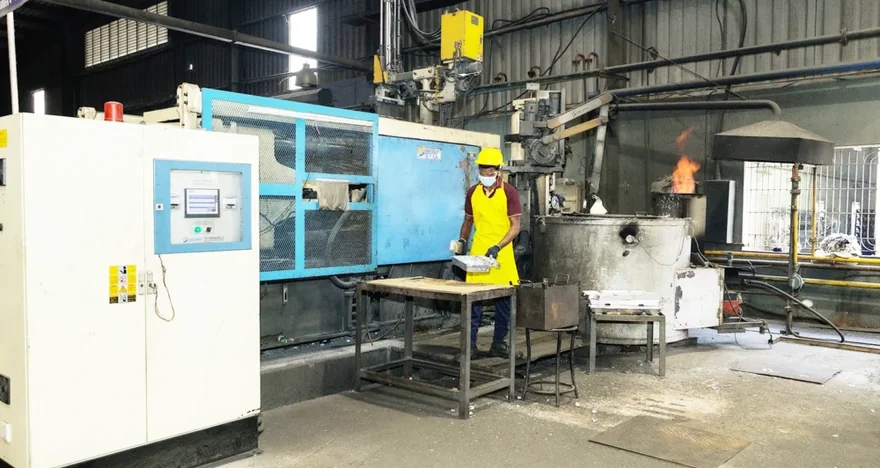
Difference Between Hot Chamber vs Cold Chamber Die Casting
Compare hot vs cold chamber die casting by speed, alloy compatibility (zinc vs aluminum), and cost efficiency.
Read article →
Lightweight, Strong, and Precise: The Ultimate Guide to Thixomolding
In high-performance manufacturing, the demand for lighter, stronger, and more intricate components continues to rise. While traditional processes like die casting have dominated for decades, a specialized manufacturing technique—thixomolding—is redefining what’s possible, especially for magnesium alloys.
If you’re looking to produce thin-walled, dimensionally stable parts with minimal porosity and exceptional surface quality, thixomolding may be the ideal solution.
Thixomolding is an advanced injection molding process primarily used for magnesium alloys. Unlike conventional die casting, which relies on fully molten metal, thixomolding processes metal in a semi-solid (slurry) state.
The name originates from thixotropy, a material property where viscosity decreases under shear stress. In thixomolding, this behaviour allows the semi-solid metal to flow smoothly into complex mold geometries—delivering the precision of plastic injection molding with the strength and durability of metal.
The thixomolding process combines precise thermal control with mechanical shearing. Here’s how it works step by step:
Both processes have their place, but the choice depends on performance requirements. Here’s a clear comparison:
| Feature | Thixomolding | Die Casting |
|---|---|---|
| Material State | Semi-solid slurry | Fully molten metal |
| Porosity | Extremely low | Higher (gas entrapment) |
| Wall Thickness | Ultra-thin (as low as 0.5 mm) | Moderate |
| Dimensional Accuracy | Excellent | Standard |
| Surface Finish | Superior | Good |
| Process Safety | High (sealed system | Lower (open molten metal) |
| Tooling Life | Longer | Shorter |
Location: Southfield, Michigan Best For: Design for Manufacturing (DFM) support and flexible global/domestic hybrid sourcing.
The Federal Group excels as an engineering and strategic sourcing partner, providing critical insight from concept to production.
AZ91D is the most widely used alloy in thixomolding due to its outstanding strength-to-weight ratio, corrosion resistance, and excellent flow characteristics in the semi-solid state.
Using AZ91D in a thixomolding process enables the production of premium components across industries such as:
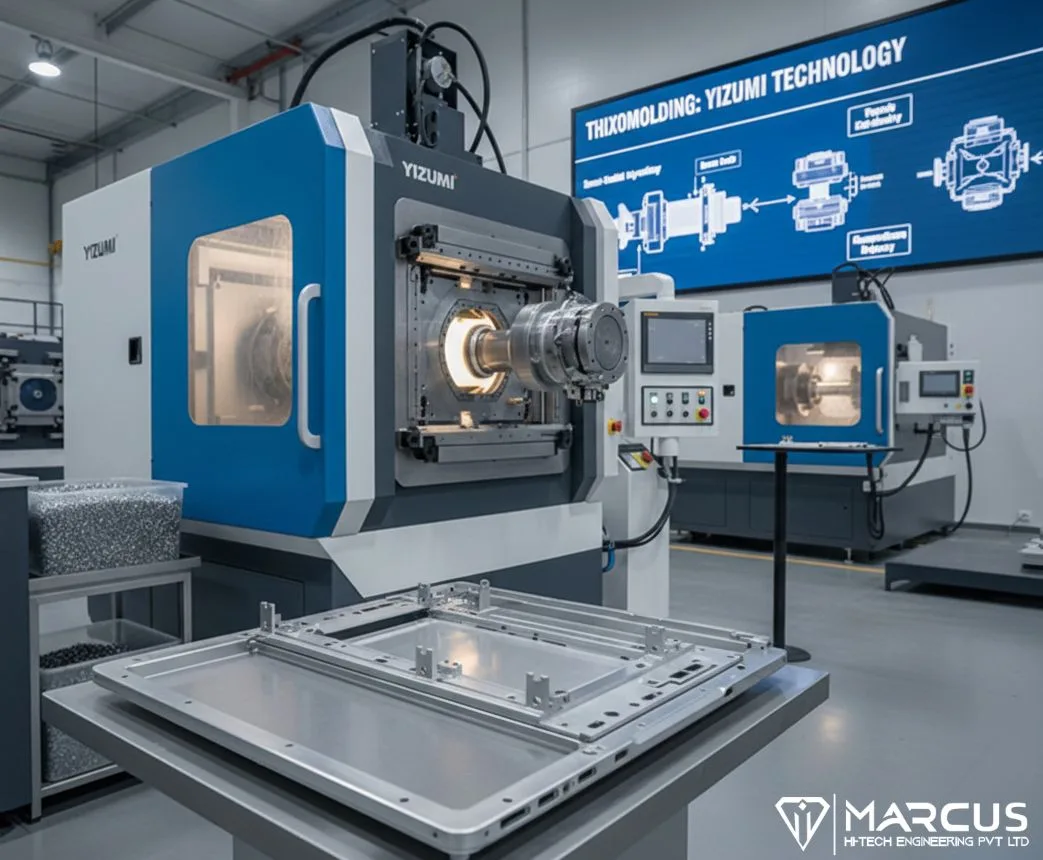
In the world of thixomolding equipment, Yizumi stands out as a global leader. Thixomolding Yizumi machines are engineered for:
Accurate thermal management is critical in thixomolding, and Yizumi’s systems ensure consistent slurry quality—making them a preferred choice for complex, high-precision magnesium parts.
Thixomolding bridges the gap between plastic injection molding flexibility and metal performance. It eliminates common challenges associated with die casting—such as porosity, warping, and inconsistent shrinkage—while enabling lightweight, high-strength designs.
Key Benefits at a Glance:
For manufacturers focused on premium, lightweight, and precision-engineered components, thixomolding is not just an alternative—it’s an upgrade.
More process, tooling, and sourcing notes from the Marcus engineering team.
Compare hot vs cold chamber die casting by speed, alloy compatibility (zinc vs aluminum), and cost efficiency.
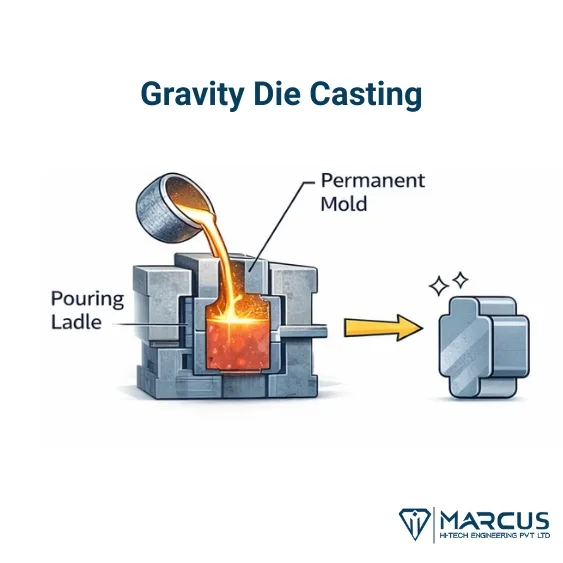
Read article →Master gravity die casting: Process, machines, and pros/cons. Learn why GDC is the top choice for high-strength metal parts in 2026.
Read article →Learn what HVM means in manufacturing, what defines high-volume production, and how die casting enables fast, consistent, cost-efficient.
Read article →