Aluminium Die Casting Manufacturers in Chennai
Top IATF certified aluminium die casting for Chennai’s EV & Auto hubs. In-house tooling & CNC machining. Get a quote today!
Read article →
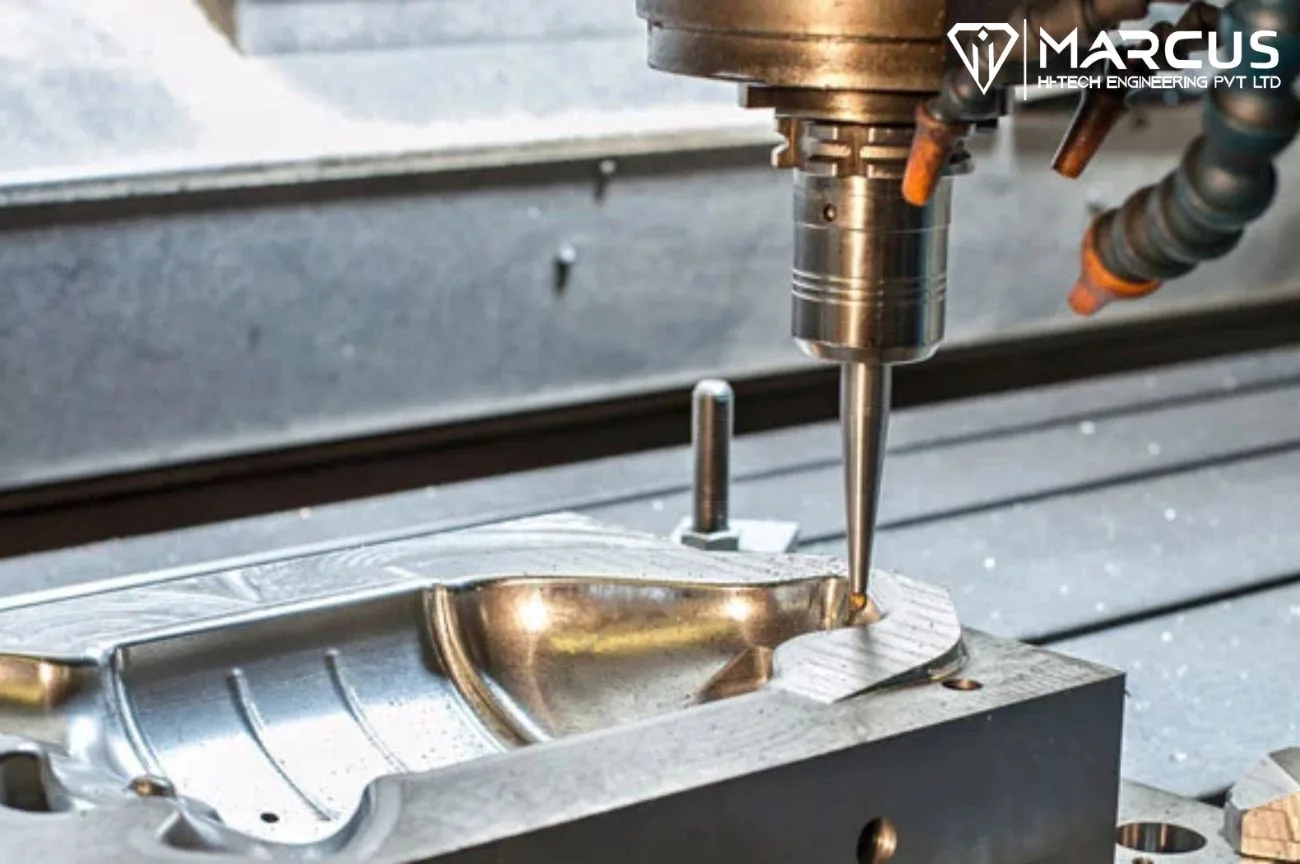
Die casting, a highly efficient and cost-effective manufacturing process has become a cornerstone of the global manufacturing industry. Die casting has witnessed significant growth worldwide with its ability to produce intricate metal parts with exceptional dimensional accuracy and surface finish.
Die casting suppliers in India offer a diverse range of die casting processes to meet the demands of various industries. The industry has experienced remarkable expansion, driven by its robust manufacturing capabilities and the rising demand for high-quality metal components.According to projections, the Die Casting Market will likely hit USD 77.99 billion in 2023, with a steady growth rate of 6.24% leading it to reach USD 105.55 billion by 2028. This growth can be attributed to the flourishing automotive, aerospace, electronics, and industrial sectors, which rely heavily on die casting to produce critical components.
As die casting continues to play a vital role in the Indian manufacturing landscape, it is crucial to understand the various casting processes offered by die casting suppliers in India. These processes, tailored to specific requirements, provide manufacturers with the means to achieve superior results, maintain production efficiency, and meet stringent quality standards.
Let’s delve deeper into each die casting process, its process overviews, advantages, and diverse industrial applications.
Pressure die casting, also known as high-pressure die casting, is a widely used manufacturing process for producing intricate metal parts. The process involves the following steps:
Vacuum die casting is a specialized form of die casting that involves using a vacuum during the casting process. The process is similar to traditional die casting but with the additional step of creating a vacuum environment within the die cavity.
Gravity die casting or permanent mold casting, is a metal casting process that utilizes the force of gravity to fill a reusable mold cavity with molten metal.
Squeeze die casting is a specialized form of die casting that involves applying additional pressure to the molten metal during the solidification process. The process includes the following steps:
Low-pressure die casting is a metal casting process that utilizes low pressure to fill a reusable mold cavity with molten metal.
Also Check: A Comprehensive Guide to Cold Chamber Die Casting Process
Overall, die casting suppliers in India provide the most common die casting processes to cater to specific needs and applications. The most commonly used method is pressure die casting due to its versatility and high production rates. However, there are other methods available such as gravity die casting, low-pressure die casting, squeeze die casting, and vacuum die casting, which offer enhanced casting integrity and dimensional accuracy to meet specialized requirements.
1.What are the different methods of die casting?
There are several different methods of die casting, each suited to specific manufacturing needs and material requirements. The primary methods of die casting include:
Cold Chamber Die Casting: In this method, the molten metal is ladled into a cold chamber where a hydraulically operated plunger forces the metal into the die cavity. Cold chamber die casting is commonly used for alloys with high melting points, such as aluminum, copper, and magnesium.
Hot Chamber Die Casting: This method is suitable for alloys with lower melting points, primarily zinc and some magnesium alloys. In hot chamber die casting, the metal is melted within the casting machine itself and then injected into the die cavity by a hydraulic piston.
Gravity Die Casting: Also known as permanent mold casting, gravity die casting relies on the force of gravity to fill the die cavity with molten metal. This method is commonly used for alloys like aluminum and copper and is often employed for casting components with thicker walls.
Low-Pressure Die Casting: In low-pressure die casting, the metal is forced into the die cavity at low pressure using a pressurized gas or mechanical means. This method is ideal for producing parts with complex shapes and thin walls while maintaining high-quality surface finishes.
Squeeze Die Casting: Squeeze die casting combines aspects of both high-pressure and low-pressure methods. It involves injecting molten metal into a die cavity and then applying pressure to the molten metal while it solidifies. This technique is used for intricate parts requiring tight tolerances.
Vacuum Die Casting: Vacuum die casting is used to reduce porosity and improve the quality of die-cast parts. It involves creating a vacuum in the die cavity before injecting molten metal. This removes trapped air and gases, resulting in high-quality, low-porosity components.
Semi-Solid Die Casting: Also known as thixocasting, this method uses a partially solidified, semisolid slurry of metal rather than fully liquid metal. The semisolid material is injected into the die cavity, producing parts with excellent mechanical properties and reduced shrinkage.
2.What are the 2 types of die casting machines?
The two primary types of die casting machines are:
Hot Chamber Die Casting Machine: In a hot chamber die casting machine, the molten metal is stored in a furnace connected directly to the machine. This molten metal is then injected into the die cavity using a piston. Hot chamber machines are typically used for metals with low melting points, such as zinc, tin, and lead, as they do not corrode or erode the machine’s components easily.
Cold Chamber Die Casting Machine: Cold chamber die casting machines are employed when working with metals with higher melting points, such as aluminum, brass, and magnesium. In this type of machine, the molten metal is kept in a separate furnace, and a ladle is used to transfer the molten metal into the cold chamber. A plunger then injects the metal into the die cavity. Cold chamber machines are favored for their ability to handle a wider range of materials and their resistance to corrosion from high-temperature metals.
3.What are the different types of die materials?
There are several different types of die materials used in various manufacturing and industrial processes. The choice of die material depends on factors such as the application, material being processed, and desired results. Here are some common types of die materials:
Tool Steel: Tool steel is a versatile and widely used die material due to its durability, hardness, and resistance to wear and abrasion. It is suitable for a wide range of applications, including metal forming and cutting.
Carbide: Carbide dies are known for their exceptional hardness and resistance to wear. Tungsten carbide is a popular choice for dies in high-stress applications, such as metal stamping and wire drawing.
High-Speed Steel (HSS): HSS is another type of steel that contains various alloying elements to enhance its hardness and wear resistance. HSS dies are often used for cutting and shaping operations at elevated speeds.
Diamond: Diamond dies are among the hardest and most durable die materials available. They are commonly used for precision wire drawing applications where an extremely smooth finish is required.
Ceramics: Ceramics, such as alumina and zirconia, are used in die manufacturing for their high-temperature resistance, electrical insulating properties, and wear resistance. They are often employed in the semiconductor and electronics industries.
Polycrystalline Diamond (PCD): PCD is a composite material made of diamond particles embedded in a metal matrix. PCD dies offer excellent wear resistance and are used for cutting and machining non-ferrous materials like aluminum and composites.
Hardenable Tool Steels: These steels can be heat-treated to achieve high hardness and wear resistance. Common examples include D2, A2, and O1 tool steels, which are used in various die applications.
Rubber and Elastomers: For softer materials like rubber, elastomeric dies made from materials like silicone are employed. These dies are suitable for shaping and cutting rubber components.
Plastic: For plastic molding and extrusion, dies made from materials like hardened steel or specialized plastics are used. These dies need to withstand the high temperatures and pressures involved in plastic processing.
Composite Materials: Some dies are constructed from composite materials, combining the advantages of different substances. For example, a die may consist of a carbide insert within a steel body for enhanced performance.
4.What are the examples of die casting?
Die casting is a versatile manufacturing process used to produce metal parts with high precision and consistency. Here are some examples of products and components that are commonly manufactured through die casting:
Automotive Parts: Many automotive components are produced through die casting, including engine parts, transmission cases, wheels, and various interior and exterior components.
Consumer Electronics: Die casting is used to create the metal housings for devices such as laptops, smartphones, and tablets.
Household Appliances: Parts for appliances like refrigerators, washing machines, and ovens are often made through die casting.
Lighting Fixtures: Decorative and functional lighting fixtures, such as lamp bases and housing for LED lights, are commonly die-cast.
Industrial Equipment: Various machinery and equipment in industries like agriculture, construction, and manufacturing rely on die-cast components for durability and precision.
Firearms: Some firearm components, particularly those made of metal, are manufactured using die casting.
Toys and Models: Metal components in toys, scale models, and miniature vehicles are often die-cast due to the high level of detail achievable.
Aerospace Parts: Certain aerospace components, including aircraft engine parts and structural elements, are produced through die casting to meet strict performance standards.
Medical Devices: Some medical instruments and devices require metal components, and die casting ensures precise manufacturing for these critical applications.
Sporting Goods: Items like bicycle frames, golf club heads, and fishing reel components are die-cast to provide strength and accuracy.
Locks and Hardware: Die casting is used to make various metal components for locks, door handles, and other hardware items.
Musical Instruments: Certain parts of musical instruments, such as brass instrument components and keyboard parts, may be manufactured through die casting.
More process, tooling, and sourcing notes from the Marcus engineering team.
Top IATF certified aluminium die casting for Chennai’s EV & Auto hubs. In-house tooling & CNC machining. Get a quote today!
Read article →Compare aluminum vs steel cost. Learn how weight reduction and lower maintenance deliver higher ROI for automotive and OEMs.
Read article →Compare Die Casting vs. Sand Casting vs. Metal Casting. Learn the pros and cons, cost differences,when to use investment casting or forging.
Read article →