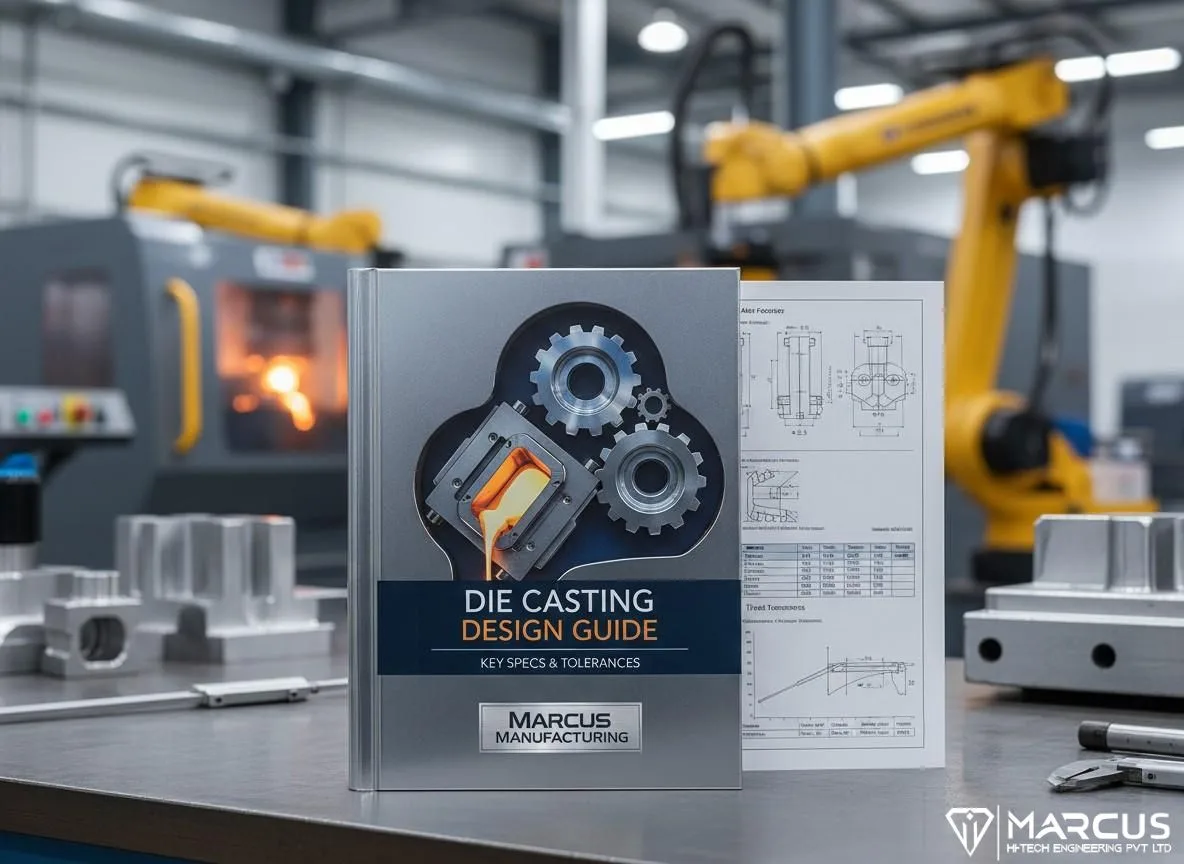
Die Casting Design Guide: Key Specs & Tolerances
A quick reference for aluminum, zinc, and magnesium die casting. Check wall thickness, draft angles, and tolerances for your next design.
Read article →
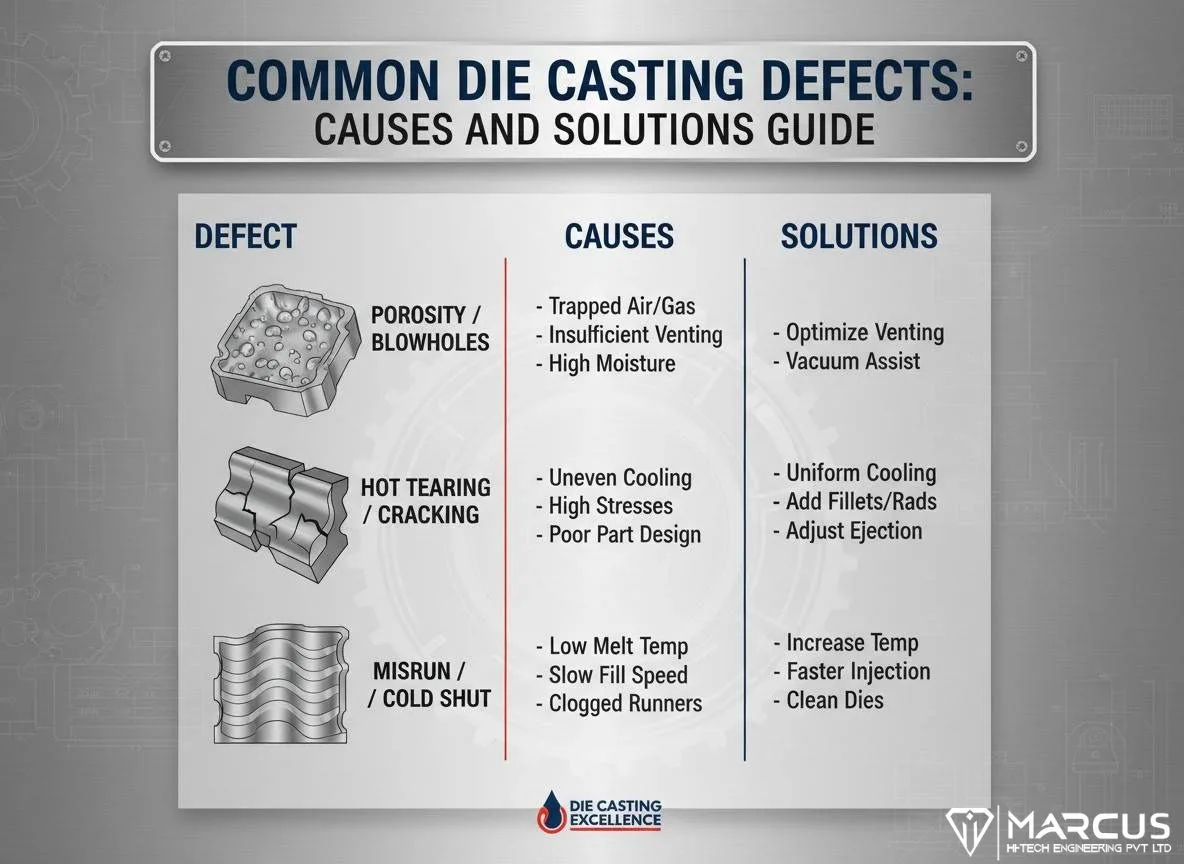
Even with excellent process control, die casting defects occur. Understanding these common issues—their causes and solutions—is essential for engineers and quality teams working to maximize yields and produce consistent, high-quality aluminum and zinc parts.
Die casting defects generally fall into three main categories:
Porosity describes voids or holes within the casting—either small gas bubbles or larger shrinkage cavities. It is one of the most common and problematic defects in aluminum die casting.
Appearance: Small, round or oval voids with smooth surfaces. Often visible on machined surfaces; requires X-ray detection for internal inspection.
Appearance: Irregular, jagged voids (unlike smooth gas porosity).
Cold shuts appear as visible lines or seams where two metal flow fronts met but failed to fuse properly, leaving a structural weak spot.
Flash appears as thin metal fins extending beyond the intended part geometry, typically along parting lines or around ejector pins.
Appearance: Wavy lines or ring-like patterns on the surface indicating the path of the metal flow.
The metal doesn’t completely fill the mold cavity, leaving portions of the part missing.
Appearance: Raised bubbles or bulges on the surface, often appearing after heat treatment.
Appearance: Irregular, oxidized cracks appearing during solidification.
Appearance: Cracks with un-oxidized edges occurring during handling.
When defects appear, follow this systematic approach:
Most aluminum die casting defects can be prevented during the design phase by ensuring uniform wall thickness, adequate draft, and proper fillets. Work closely with your die casting supplier—their experience is the best tool for optimizing your specific design and minimizing scrap.
More process, tooling, and sourcing notes from the Marcus engineering team.
A quick reference for aluminum, zinc, and magnesium die casting. Check wall thickness, draft angles, and tolerances for your next design.
Read article →Explore mold anatomy and design. See how a top die casting mold manufacturer uses DFM to reduce costs and improve quality.
Read article →Die casting surface finishing transforms raw aluminum castings into high-performance components with improved durability pro
Read article →